The scientific project The Impact of European Policies on Socio-Economic Development and Public Policies in Croatia – EUROIMPACT, which is being conducted by the Department of European Policies at the Institute for Development and International Relations (IRMO), aims to investigate the impact of European policies on socio-economic development and public policies in Croatia. The project focuses on the processes through which European Union policies affect the economic, political, and social development of the Republic of Croatia. The project is funded within the Framework Agreement between IRMO and the Ministry of Science, Education and Youth of the Republic of Croatia, with funds from the National Recovery and Resilience Plan 2021-2026, the NextGeneration EU program.
All activities carried out by the Department of European Policies within the framework of the project will be consolidated on this website, with the aim of ensuring a better understanding of the channels and levels of impact of EU Cohesion policy on development in member states, with a focus on the situation in Croatia, and determining how contemporary trends shaping industrial relations, particularly digitalization and automation processes, affect the behavior of social partners and shape public policies.
News
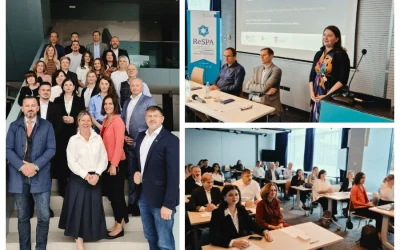
IRMO Participates in the International Regional Development Academy
Dr Jakša Puljiz, Director of the Institute for Development and International Relations (IRMO), participated as a lecturer in the international Regional Development Academy, held from 11 to 17 October 2026 in Vodice and Šibenik-Knin County, Croatia. The Academy was...
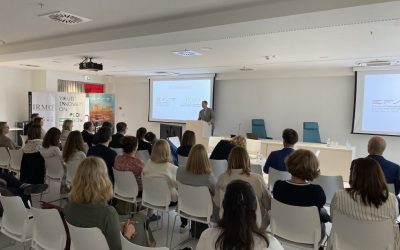
ERSA CROATIA CONFERENCE: “EU Regional Development Dialogues: From Policy to Research”
SPLIT, 28–29 September 2026 The conference “EU Regional Development Dialogues: From Policy to Research” was held in Split on 28 and 29 September 2026. The event was organised by ERSA Croatia, the Faculty of Economics at the University of Split, and the Institute for...
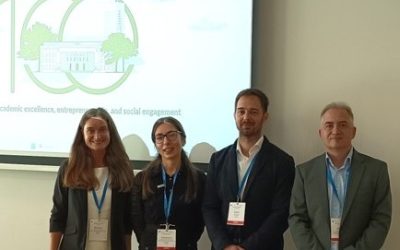
Hrvoje Butković Participated at the Conference Marking the 100th Anniversary of the Poznań University of Economics and Business
Hrvoje Butković, Scientific Adviser from the Department for European Policies participated in the 2026 Central and Eastern Europe (CEE) Conference, held in Poznań, Poland, from 14 to 16 September 2026. Organised by the Regional Studies Association (RSA) in partnership...