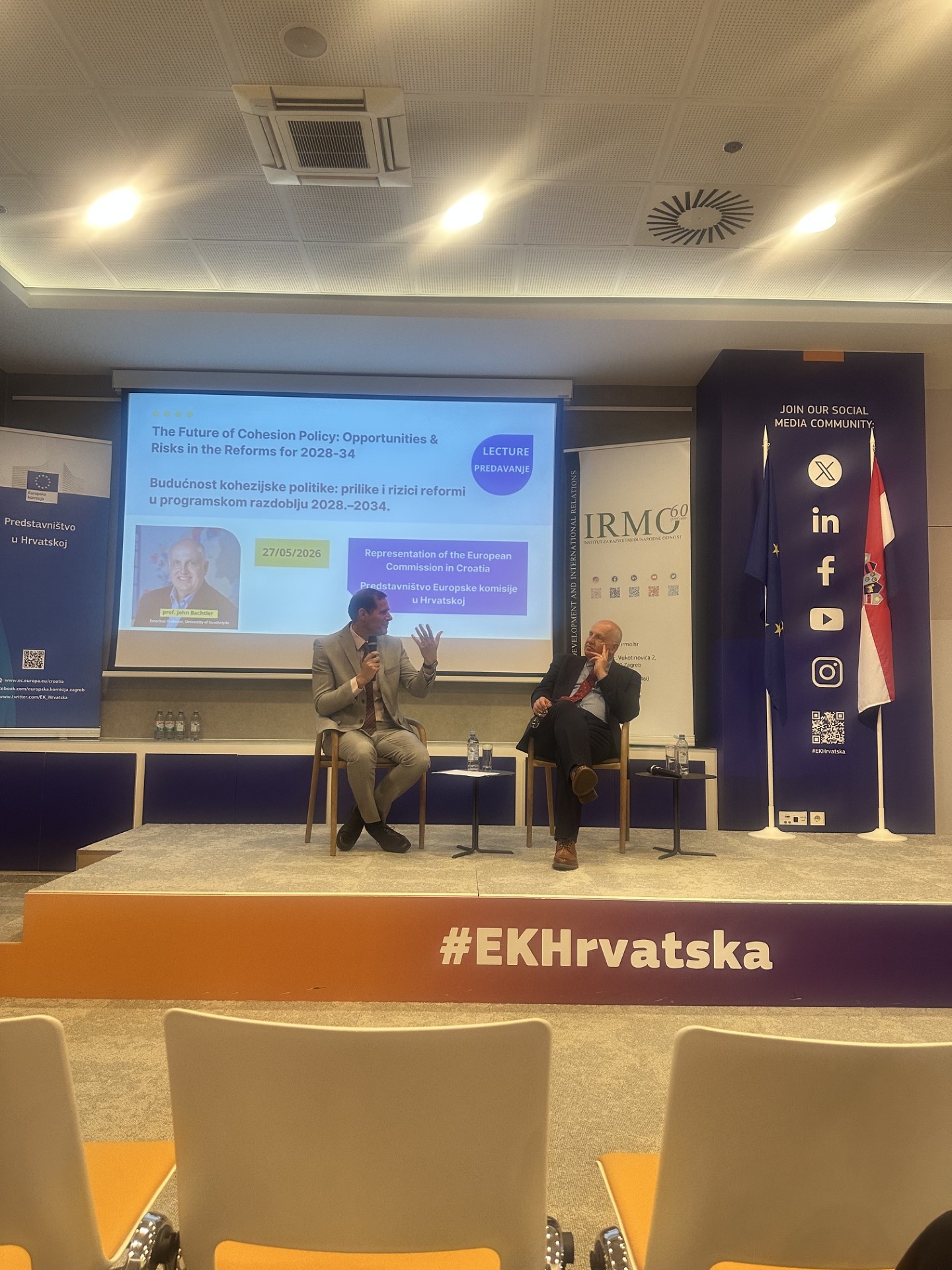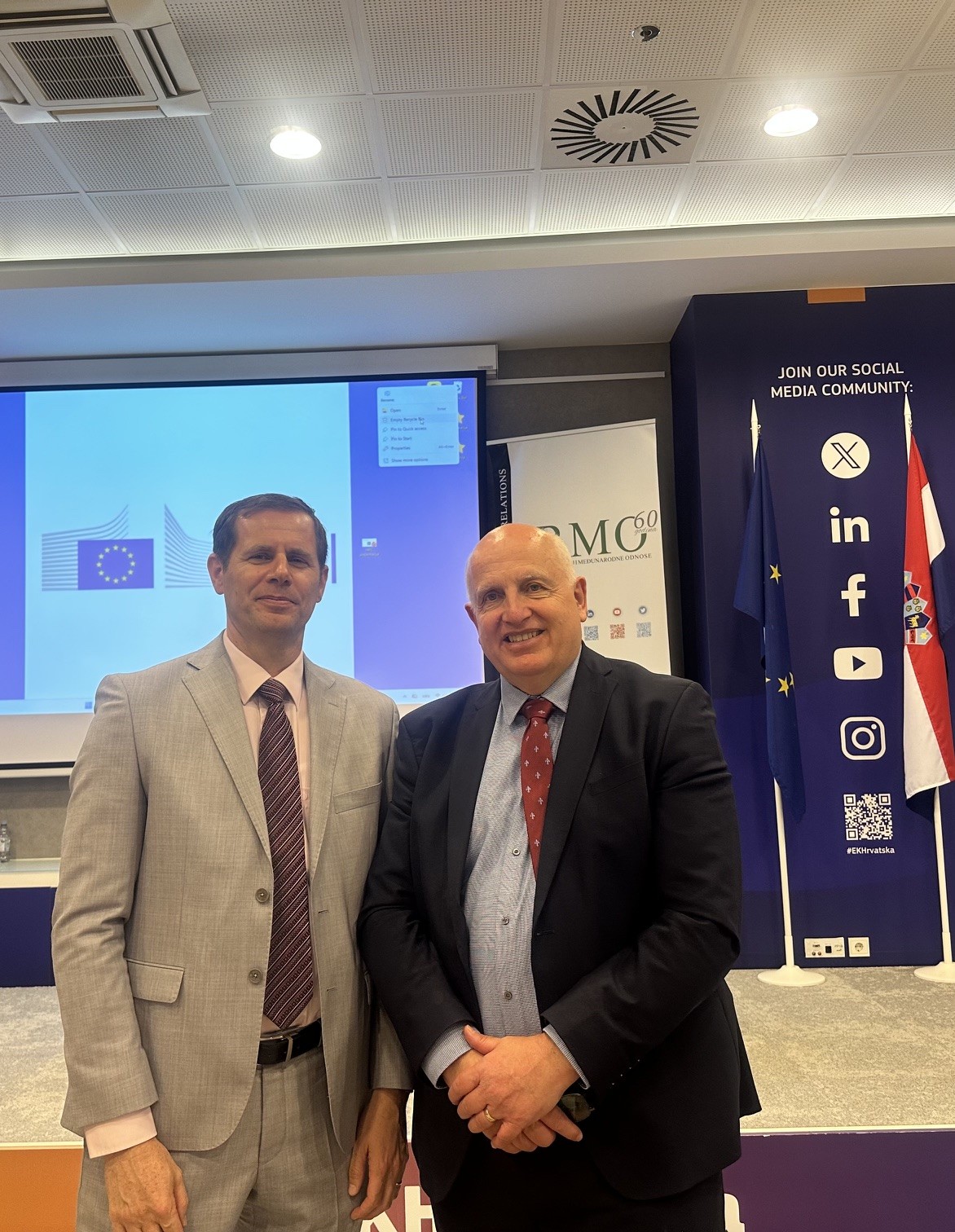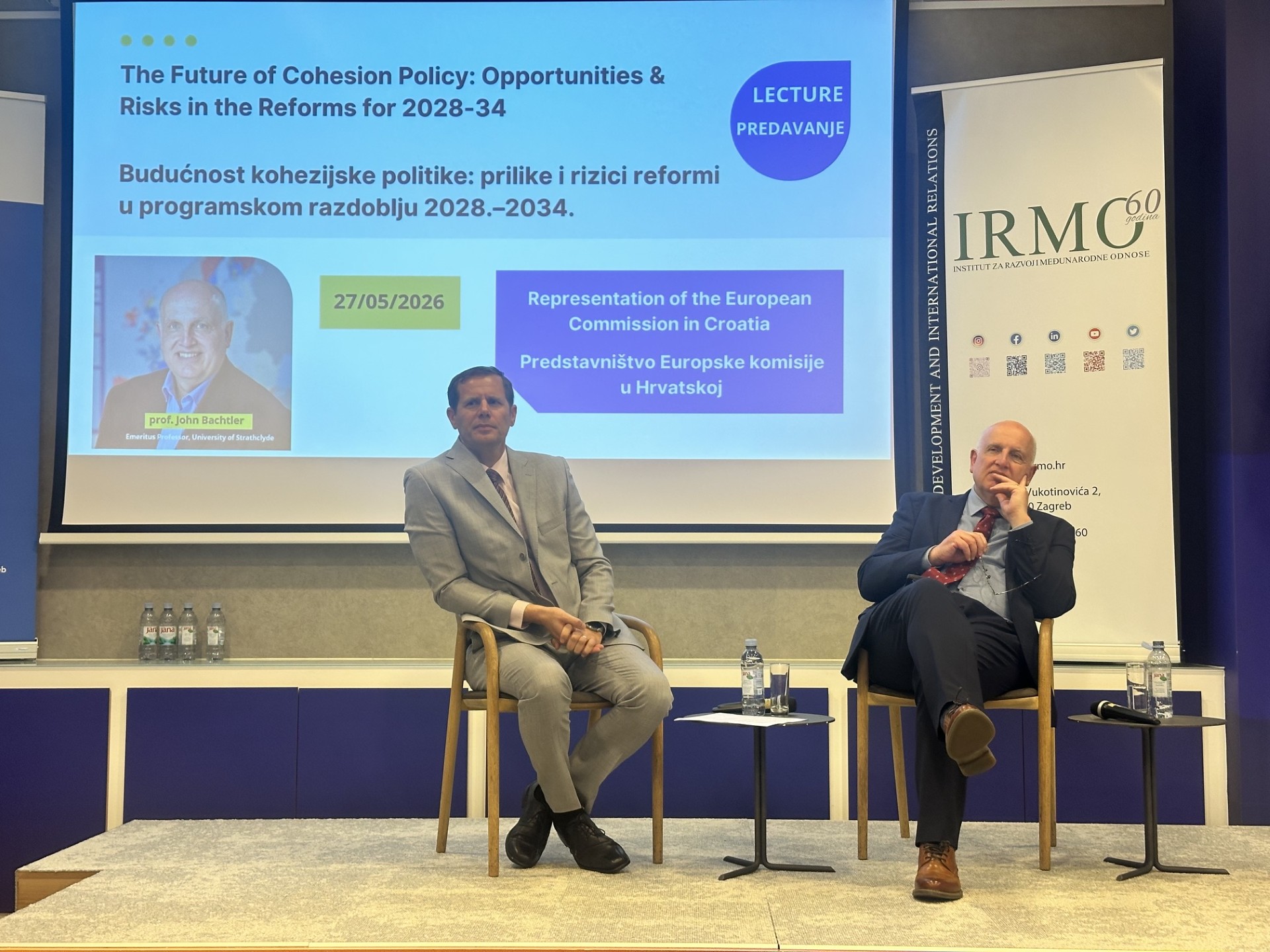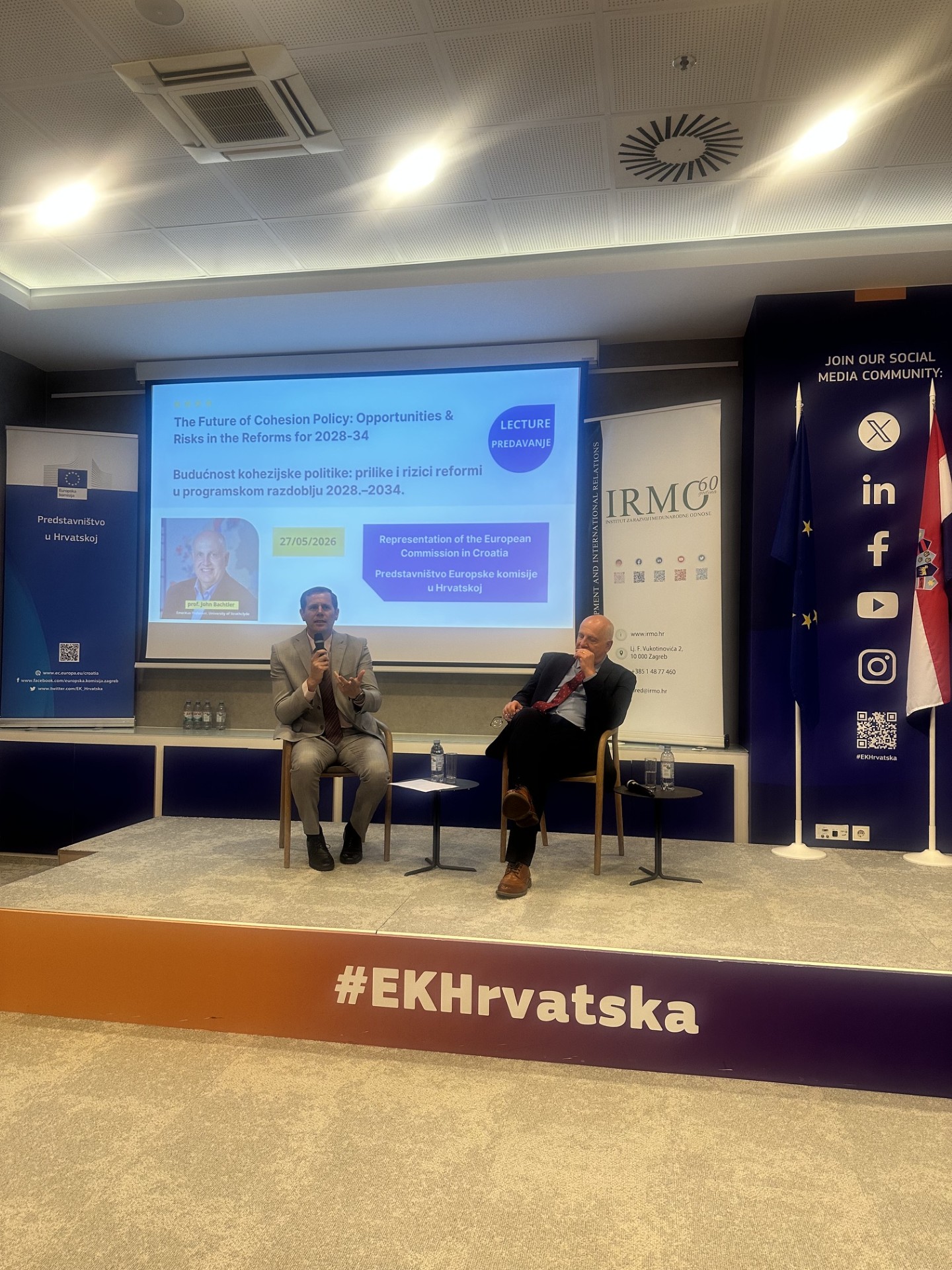
Prof. Bachtler, Professor Emeritus at the University of Strathclyde in Glasgow and former Director of the European Policies Research Centre, analysed the future of cohesion policy in the context of the reform of the European Union’s Multiannual Financial Framework for the period 2028-2034. He particularly focused on the increasing pressure of the EU’s new strategic priorities: competitiveness, strategic autonomy, green transition, demographic change, defence, resilience, and enlargement, on the available budgetary resources of the Union.
The focus of the lecture was on the European Commission’s proposals for the new MFF, including budget restructuring, strengthening competitiveness and security financing, reducing allocations for cohesion policy and common agricultural policy, and introducing national and regional partnership plans. Prof. Bachtler pointed out that the proposed reform opens opportunities for greater policy coordination, more flexible implementation, and a stronger emphasis on results, but it also carries important risks for the visibility, financing, and territorial orientation of cohesion policy.
Special attention is paid to the role of space and territorial differences in the realization of future European priorities. Prof. Bachtler emphasized that regional differences, the so-called “development traps”, the vulnerabilities of certain areas in achieving the goals of the green transition, the institutional capacities of regions, and the role of small and medium-sized cities must remain at the centre of the discussion on the future of cohesion policy. He also warned of the possibility of strengthening centralization, weakening regional ownership of programs, and increased competition between sectoral and territorial goals.
The lecture also covered the course of negotiations on the new MFF, the different positions of the Member States and the European Parliament, as well as open issues related to multi-level governance, implementation models, performance indicators, audit, simplification, and budgetary flexibility. In conclusion, it was emphasized that the reform for the period 2028-2034 will be one of the key tests for the future character of cohesion policy: whether it will remain a European development policy aimed at reducing territorial disparities or will it gradually be subordinated to broader sectoral and national priorities.
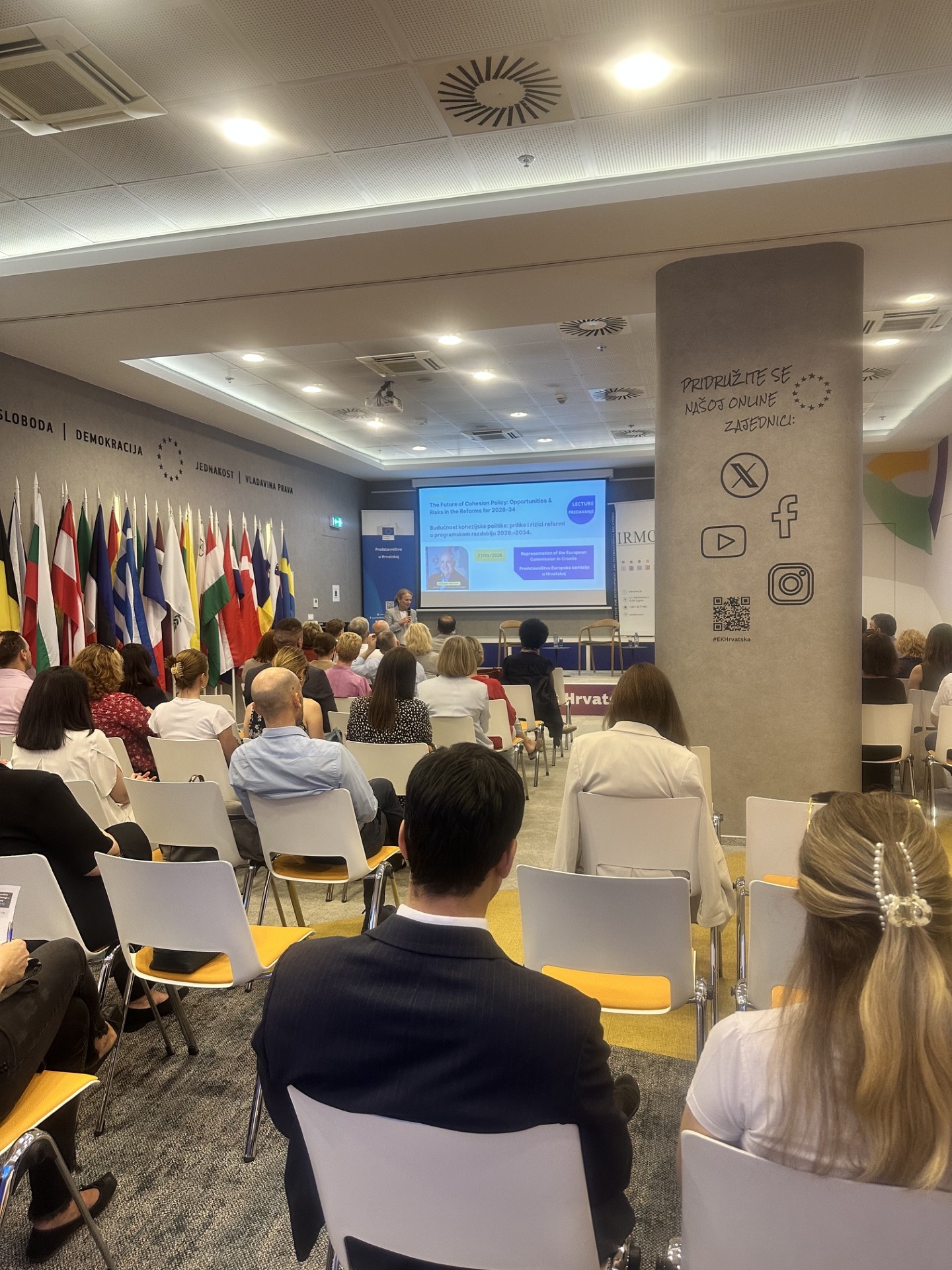
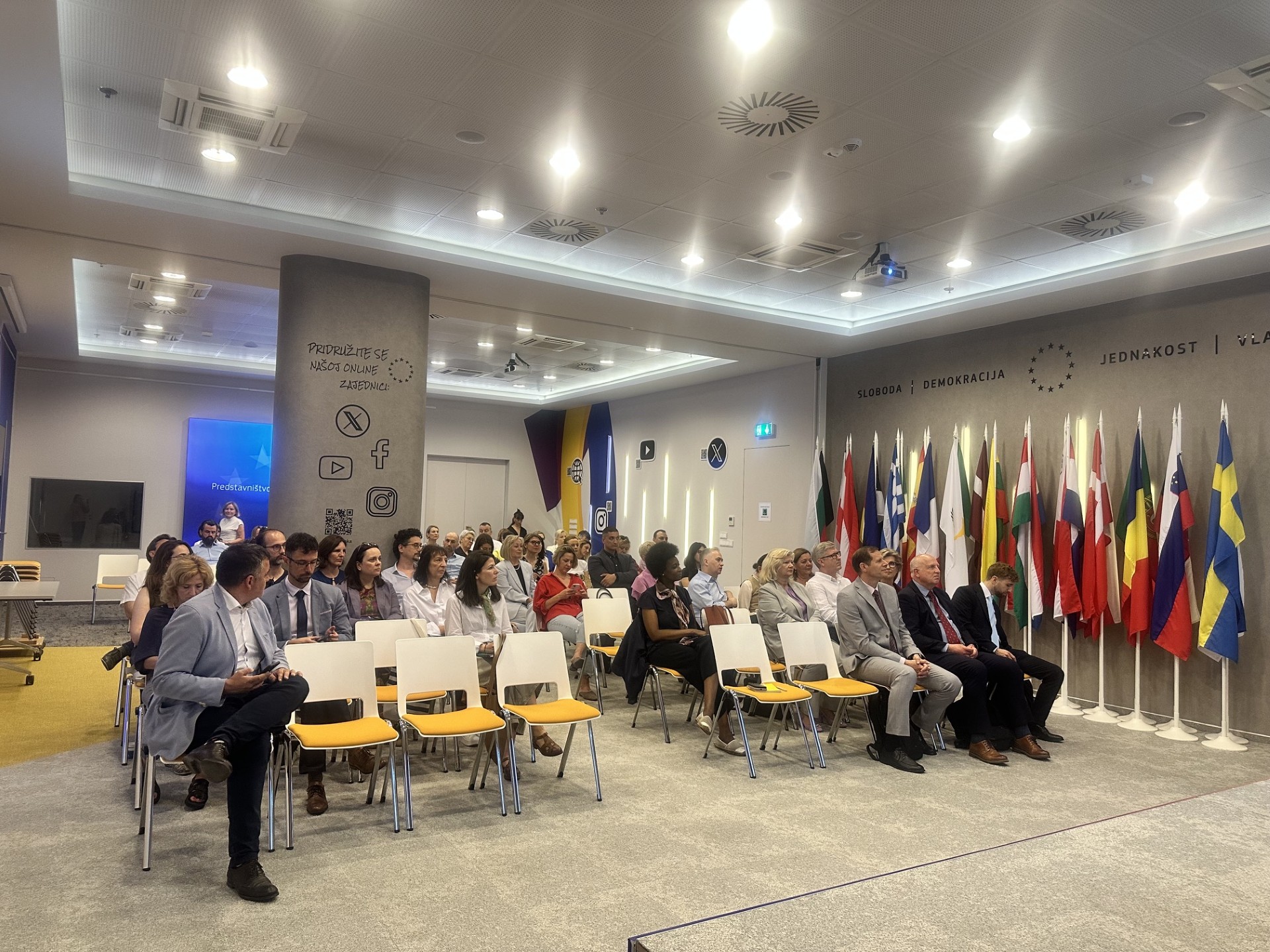
The lecture was followed by a discussion in which representatives of the academic community, public institutions, and the private sector participated. The discussion focused on the future distribution of EU funds, the role of regions in the new programming framework, multi-level governance, and the relationship between cohesion policy and the new European Competitiveness Fund.
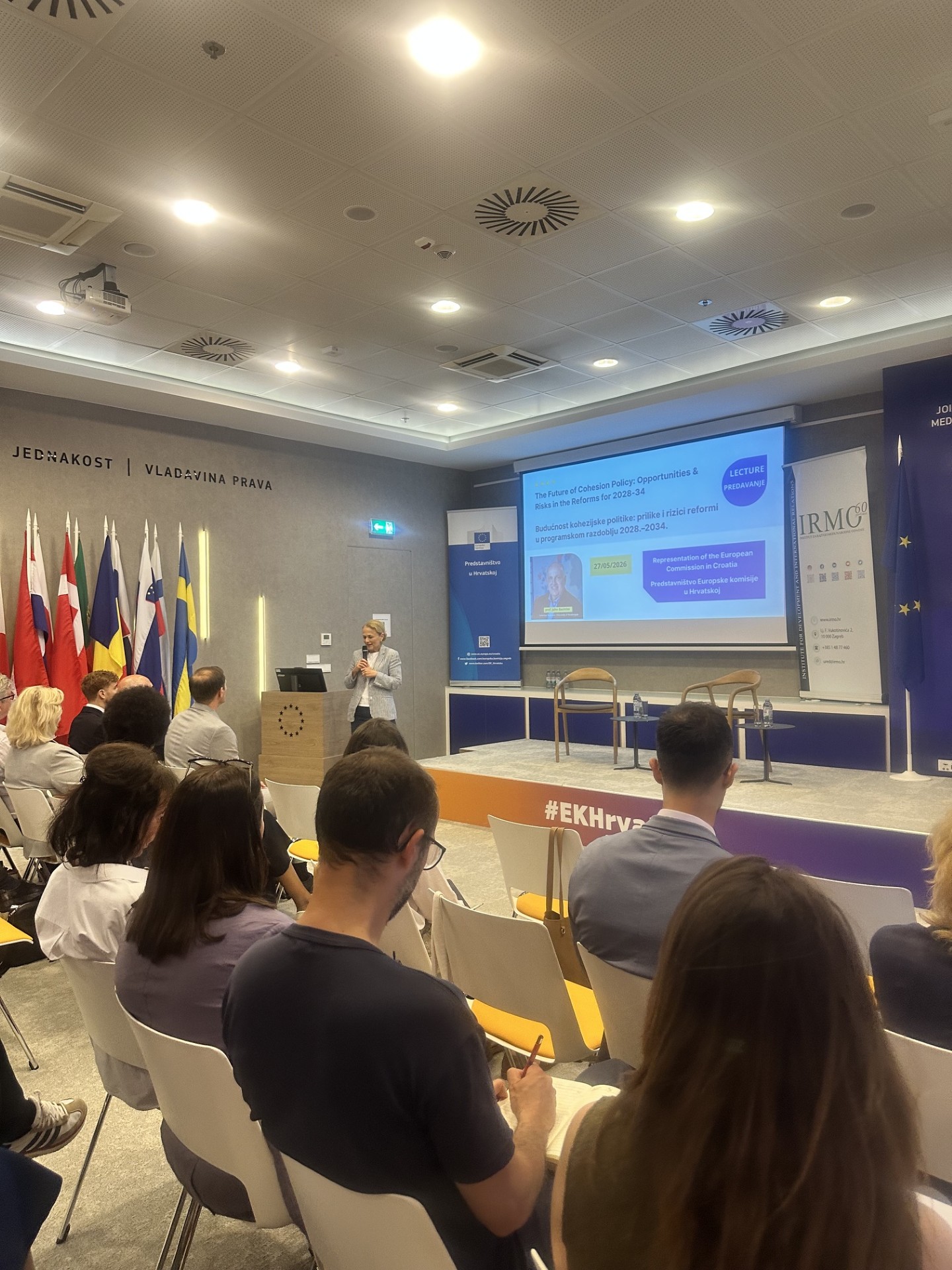
The opening speeches were given by the Head of the European Commission Representation in Croatia, Ms. Zrinka Ujević, and the Director of the Institute for Development and International Relations, Jakša Puljiz, PhD, while the closing remarks were given by Emerita Sanja Maleković, PhD, from IRMO, who summarised the key messages of the lecture and discussion.
We thank Prof. Bachtler, the European Commission Representation in Croatia and all participants for a highly relevant and timely discussion.